
|
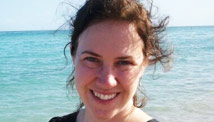
Editor's Note: Kerry Egan is a hospice chaplain in Massachusetts, and the author of "Fumbling: A Pilgrimage Tale of Love, Grief, and Spiritual Renewal on the Camino de Santiago." |
By Kerry Egan, Special to CNN As a divinity school student, I had just started working a student chaplain at a cancer hospital when my professor asked me about my work. I was 26 years old and still learning what a chaplain did. "I talk to the patients," I told him. "You talk to patients? And tell me, what do people who are sick and dying talk to the student chaplain about?" he asked. I had never considered the question before. “Well,” I responded slowly, “Mostly we talk about their families.” “Do you talk about God? “Umm, not usually.” “Or their religion?” “Not so much.” “The meaning of their lives?” “Sometimes.” “And prayer? Do you lead them in prayer? Or ritual?” “Well,” I hesitated. “Sometimes. But not usually, not really.” I felt derision creeping into the professor's voice. “So you just visit people and talk about their families?” “Well, they talk. I mostly listen.” “Huh.” He leaned back in his chair. A week later, in the middle of a lecture in this professor's packed class, he started to tell a story about a student he once met who was a chaplain intern at a hospital. “And I asked her, 'What exactly do you do as a chaplain?' And she replied, 'Well, I talk to people about their families.'” He paused for effect. “And that was this student's understanding of faith! That was as deep as this person's spiritual life went! Talking about other people's families!” The students laughed at the shallowness of the silly student. The professor was on a roll. “And I thought to myself,” he continued, “that if I was ever sick in the hospital, if I was ever dying, that the last person I would ever want to see is some Harvard Divinity School student chaplain wanting to talk to me about my family.” My body went numb with shame. At the time I thought that maybe, if I was a better chaplain, I would know how to talk to people about big spiritual questions. Maybe if dying people met with an good, experienced chaplain they would talk about God, I thought. Today, thirteen years later, I am a hospice chaplain. I visit people who are dying – in their homes, in hospitals, in nursing homes. And if you were to ask me the same question: What do people who are sick and dying talk about with the chaplain? I, without hesitation or uncertainty, would give you the same answer: Mostly, they talk about their families: about their mothers and fathers, their sons and daughters. They talk about the love they felt, and the love they gave. Often they talk about love they did not receive, or the love they did not know how to offer, the love they withheld, or maybe never felt for the ones they should have loved unconditionally. They talk about how they learned what love is, and what it is not. And sometimes, when they are actively dying, fluid gurgling in their throats, they reach their hands out to things I cannot see and they call out to their parents: Mama, Daddy, Mother. What I did not understand when I was a student then, and what I would explain to that professor now, is that people talk to the chaplain about their families because that ishow we talk about God. That is how we talk about the meaning of our lives. That ishow we talk about the big spiritual questions of human existence. We don't live our lives in our heads, in theology and theories. We live our lives in our families: the families we are born into, the families we create, the families we make through the people we choose as friends. This is where we create our lives, this is where we find meaning, this is where our purpose becomes clear. Family is where we first experience love and where we first give it. It's probably the first place we've been hurt by someone we love, and hopefully the place we learn that love can overcome even the most painful rejection. This crucible of love is where we start to ask those big spiritual questions, and ultimately where they end. I have seen such expressions of love: A husband gently washing his wife's face with a cool washcloth, cupping the back of her bald head in his hand to get to the nape of her neck, because she is too weak to lift it from the pillow. A daughter spooning pudding into the mouth of her mother, a woman who has not recognized her for years. A wife arranging the pillow under the head of her husband's no-longer-breathing body as she helps the undertaker lift him onto the waiting stretcher. We don't learn the meaning of our lives by discussing it. It's not to be found in books or lecture halls or even churches or synagogues or mosques. It's discovered through these actions of love. If God is love, and we believe that to be true, then we learn about God when we learn about love. That first, and usually the last, classroom of love is the family. Sometimes, that love is not only imperfect; it seems to be missing entirely. Monstrous things can happen in families. Too often, more often than I want to believe possible, patients tell me what it feels like when the person you love beats you or rapes you. They tell me what it feels like to know that you are utterly unwanted by your parents. They tell me what it feels like to be the target of someone's rage. They tell me what it feels like to know that you abandoned your children, or that your drinking destroyed your family, or that you failed to care for those who needed you. Even in these cases, I am amazed at the strength of the human soul. People who did not know love in their families know that they should have been loved. They somehow know what was missing, and what they deserved as children and adults. When the love is imperfect, or a family is destructive, something else can be learned: forgiveness. The spiritual work of being human is learning how to love and how to forgive. We don’t have to use words of theology to talk about God; people who are close to death almost never do. We should learn from those who are dying that the best way to teach our children about God is by loving each other wholly and forgiving each other fully. Just as each of us longs to be loved and forgiven by our mothers and fathers, sons and daughters. |
For Kerry,
ReplyDeletei Hope this can be a light in the darkness for some that are terminally ill,
God’s precious gift – called Mom
When her pain was almost unbearable -I saw the love and caring in her eyes when a 4 yr old great-grandson ask her if she was sick and if he could do anything to make her feel better, in all her pain-she lovely looked into his eyes and tried to explain why he could not.
In these moments with her- I remembered Her from my early childhood years;
Her broken heart, a very tough road ahead as a single Mom, she must have prayed to find this kind of love during these decades of hardship to follow ----– I recalled the same look of joy in her eyes when one Christmas with nothing , she found a $1.00 -2ft Christmas tree and worked so hard to make strings of popcorn for decorations , how this simple joy of unselfish giving, lifted all our spirits, how she lifted herself up and made us all a promise --next year was going to be better and it was.
I now have seen and witnessed this same love and devotion with her lord, later in her life-- I now know that God healed her heart, I know and understand and I Hope all of you will to.
Because of her, I KNOW--Jesus our Lords spirit is never lost, We must always remember- Our Lords love shines thru all of our Mother’s eyes, in the toughest of times and the good times.
It is placed there with the 1st beat of all Mothers’ hearts;
The true joy of giving, the strength that love /God -can have in one’s life --and during unseemly impossible odds—All can be overcome if seen through Mother’s eyes.
Please know from my Moms life, that the dignity that oneself my loose without remembering this , can always be found again-as She did---- if we try our best to see with a true heart and Mother’s eyes.
With the deepest of love, thank you Mom.